All Categories
Featured
Table of Contents
We use cookies to collect and evaluate information on site efficiency and use, to offer social networks functions and to improve and personalize material and ads. Find out more PERMIT ALL USE ONLY NEEDED COOKIES Cookies used on the site are classified and listed below you can check out each classification and enable or deny some or all of them.
Part 2 Acquaint yourself with the various parts of the Google Analytics user interface, consisting of how to search, handle your account, access aid content, find your reports, and personalize your reports.
Analytics Tools provide an insight into the efficiency of your site, visitors habits, and information flow. These tools are low-cost and simple to use. In some cases, they are even complimentary. Google Analytics is a freemium analytic tool that supplies an in-depth stats of the web traffic. It is utilized by more than 60% of website owners.
Optimizing the Entire User Lifecycle to Support Retention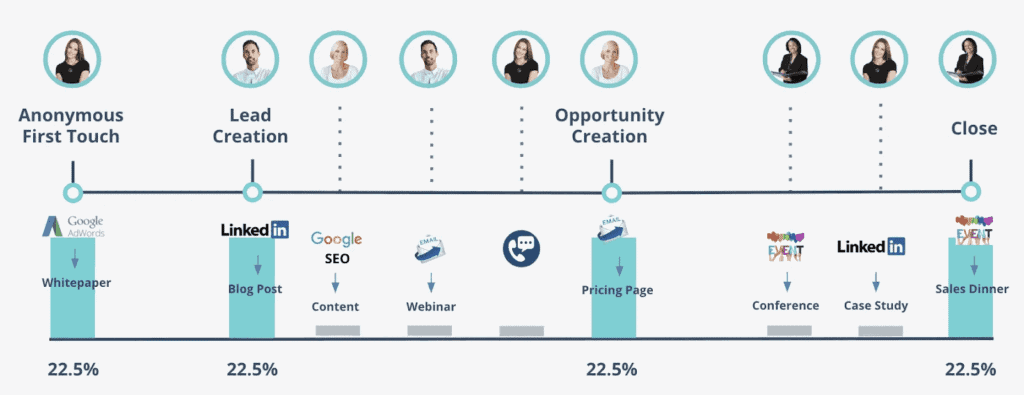
It generally creates reports on Audience Analysis Acquisition Analysis Behavior Analysis Conversion Analysis Let us discuss each one of them in detail. As the name recommends, audience analysis provides you an introduction of the audience who visit your website along with their session history, page-views, bounce rate, and so on. You can trace the brand-new in addition to the returning users together with their geographical areas.
Scaling a Brand With Data-Driven Analytics
New and returning visitors, their frequency, and engagement under Behavior. Custom-made variable report under Customized. This report shows the activity by custom-made modules that you developed to catch the selections.
Benchmarking permits you to compare your metrics with other associated markets. You can outline what you need to incur in order to overtake the market. Flow of user activity under Users circulation to see the path they handled your website. Acquisition indicates to acquire. Acquisition analysis is performed to learn the sources from where your web traffic originates.
Trace traffic from AdWords (paid search). See traffic from search engines. Here, you can see Queries, set off landing pages, and geographical summary. Track social networks traffic. It helps you to recognize networks where your users are engaged. You can see referrals from where your traffic originates. You can likewise have a view of your center activity, bookmarking sites follow-up, and so on.
Optimizing the Entire User Lifecycle to Support RetentionIt assists you determine the effect of social media on your website. Habits analysis keeps an eye on users activities on a website.
You can see the in-depth interaction of information across all pages or in segments like content drill-down, landing pages, and exit pages. Content drill-down is separating of information into sub-folders. Landing page is the page where the user lands, and exit page is where the user exits your website.
Adapting to Next-Gen Social Algorithms
Site Speed Here, you can capture page load time, execution speed, and efficiency data. You can see how rapidly the web browser can parse through the page. Even more, you can determine page timings, user timings, and get speed suggestion. It helps you to know where you are lagging. Site Browse It offers you a complete photo of how the users search across your site, what they typically look for, and how they get to a specific landing page.
Events Events are visitors actions with material, which can be traced individually. Example downloads, sign up, log-in, etc. Conversion is a goal completion or a transaction by a user on your site. Download, checkout, purchase, and so on. To track conversions in analytics, you require to specify a goal and set a URL that is traceable.
You can set them to track the actions. Each time an objective is achieved, a conversion is added to your information. You can observe goal completion, value, reverse course, and objective circulation. Ecommerce You can set ecommerce tracking to understand what the users purchase from your site. It assists you to find item efficiency, sale efficiency, deals, and purchase time.
Multi-channel funnels Multi-channel funnels or MCF reports the source of conversion; what functions the website plays, recommendations function because conversion; and what all pieces did when users travel through landing page to conversion. A user browsed for a question on Google search page, he went to the website, but did not convert.
All these activities can be traced on MCF. Attribution Attribution modeling credits sales and conversions to touch points in conversion tracking. It lets you choose what platforms or technique or module is the very best for your organization. Suppose a person visited your site through AdWords ad and made no purchase.

Latest Posts
Advanced SEO Strategies for E-Commerce Stores
High-Impact SEO Methods for Growing Online Outlets
Growing the Business With Data-Driven Strategies